The Illusion of Real Estate Wealth - Why My Home Wasn’t the Investment Win I Thought It Was

(Image source : Gemini)
For years, I looked at my home and felt a quiet sense of financial achievement.
Seven years ago, I purchased the land and built my primary residence for ₹34 Lakhs:
- Land: 3.5 cents at ₹4 Lakhs/cent = ₹14 Lakhs
- Construction: 1,000 sq. ft. at ₹2,000/sq. ft. = ₹20 Lakhs
Fast-forward to today. Land in my locality is hovering near ₹9 Lakhs per cent, and Building can be valued around ₹2,400 per sq. ft.
On paper the math looked extraordinary:
- Land Value: 3.5 cents × ₹10 Lakhs = ₹31.5 Lakhs
- Building Replacement Value: 1,000 sq. ft. × ₹2,300 = ₹23 Lakhs
- Total Estimated Valuation: ₹54.5 Lakhs
A jump from ₹34L to ₹54.5L feels like an absolute gain of ₹20 Lakhs (a 60.3% total increase). It was easy to believe real estate had delivered a home run—until I actually sat down and ran the numbers.
The Reality Check: Why the Math Tells a Different Story
-
The Compound Annual Growth Rate (CAGR) is Only ~6.97%:
Growing from ₹34L to ₹59L over 7 years works out to a CAGR of ~7%. While positive on the surface, it barely outpaces real-world inflation and matches standard debt instruments once transaction friction, taxes, and holding costs are considered. -
Past Rallies Don’t Guarantee Future Growth (The 7% is Not Sustainable):
Real estate enjoyed a strong micro-market run over the past few years, driven by infrastructure development and rapid land repricing. Expecting this pace to continue indefinitely is unrealistic. Land costs hit natural affordability ceilings, meaning that even a modest ~7% annual return will be difficult to sustain over the next decade. -
A Primary Residence Should Not Be Counted as an Investable Asset:
From a strict personal finance and portfolio-allocation standpoint, the roof over your head shouldn't be counted in your net-worth asset calculations for wealth generation. It generates zero cash flow, carries high illiquidity, and cannot be liquidated to fund financial goals, education, or retirement unless you plan to sell and downsize into a cheaper lifestyle. -
The Depreciation and Replacement Illusion:
Land appreciates; structures depreciate. Valuing a 7-year-old building at the current cost of brand-new construction (₹2,300/sq. ft.) ignores physical wear and tear, aging interiors, and periodic maintenance costs. The real salvage or market value of an aging structure is substantially lower without regular capital reinvestment. -
The Hidden Friction Costs:
The initial ₹34L outlay excludes registration charges, stamp duty, property taxes, maintenance, and interest paid on a home loan over 7 years. Factor those cash outflows in, and the true net return drops considerably.
The Big Picture
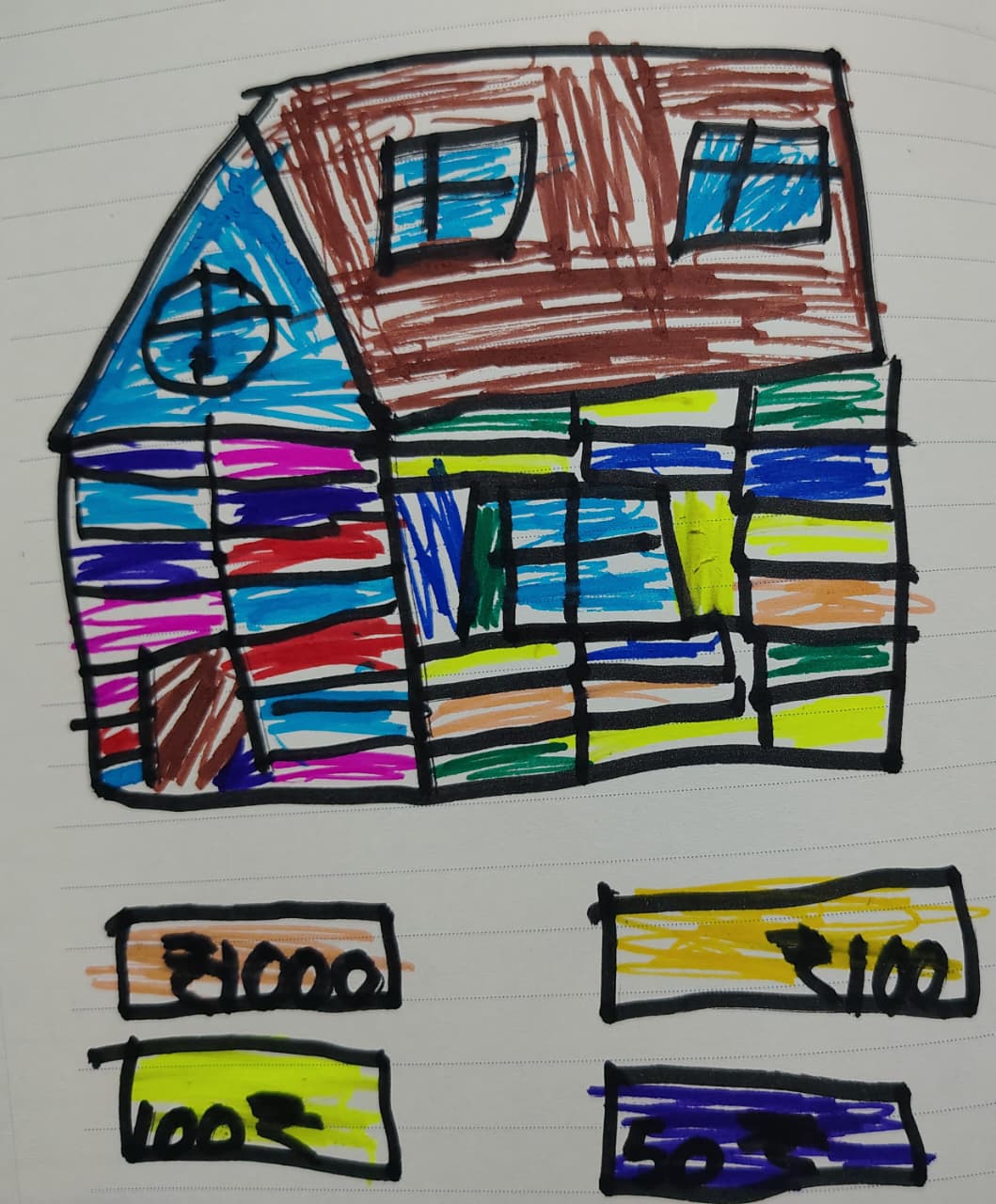
(Doodle Art : Magizhan Nagarajan)
Owning your home gives you emotional peace, community stability, and personal autonomy—qualities that cannot be quantified on a balance sheet. But treating your primary residence as a high-performing investment vehicle is a mathematical trap. It is fundamentally a lifestyle asset that builds home equity, not a compounding engine for financial independence.