The Art of Spending Money
A book by Morgan Housel
🤔 Thought I Needed a Better Budget. Actually Needed a New Philosophy 🌱.
Picked up The Art of Spending Money expecting a tactical manual—perhaps a guide on asset allocation or how to optimize my credit card points. My mindset going in was that of a learner looking for optimization; I wanted the math to make the math work better.
What I found instead was exactly the opposite.
This isn’t a book about finance; it is a book about psychology, sociology, and the stories we tell ourselves about value. Have organized my biggest takeaways below, visualized through the key concepts that reshaped my thinking.
1. The Spreadsheet Trap
We tend to treat money as a math problem. If we just get the inputs right (income) and the outputs right (expenses), we win. But as I read, realized why "smart" people make "bad" money decisions.
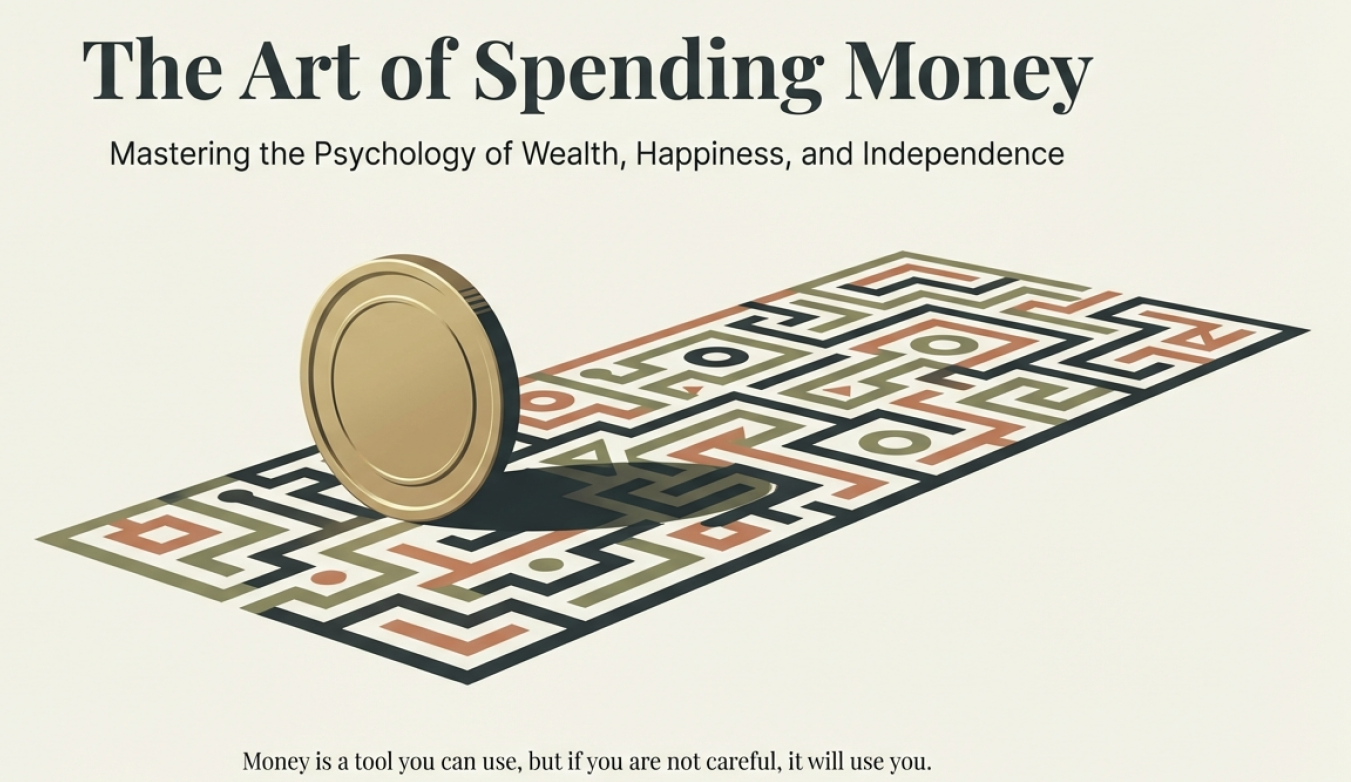
The book opens with a powerful idea: "All behavior makes sense with enough information". We judge others for their spending, but everyone is just navigating life based on their own unique traumas and experiences.
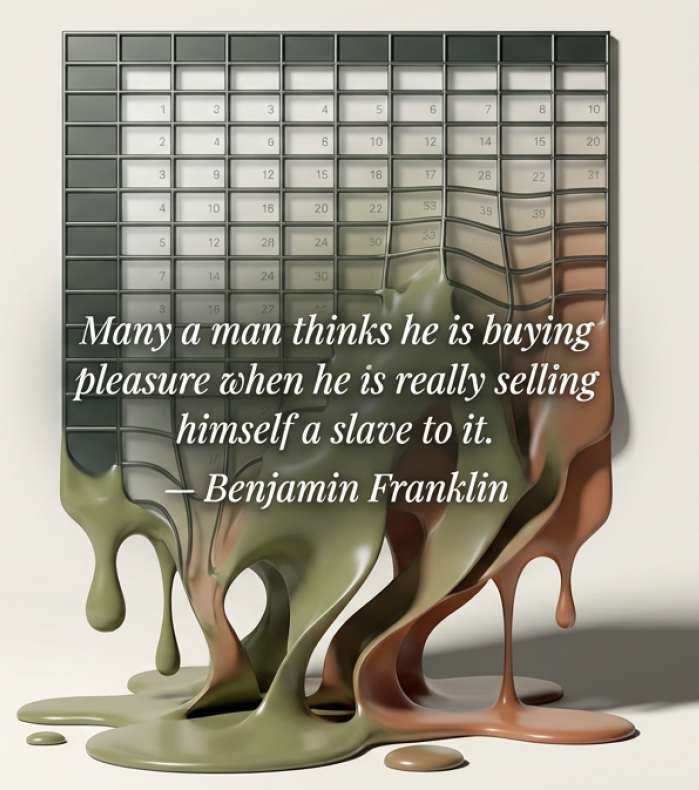
The quote from Benjamin Franklin hit me hard: "Many a man thinks he is buying pleasure when he is really selling himself a slave to it". Realized I had been letting the "blind lust for more" hijack my identity, rather than using money as a tool
2. The Ego Paradoxes
The most uncomfortable part of reading this was realizing how much of our spending was driven by ego.
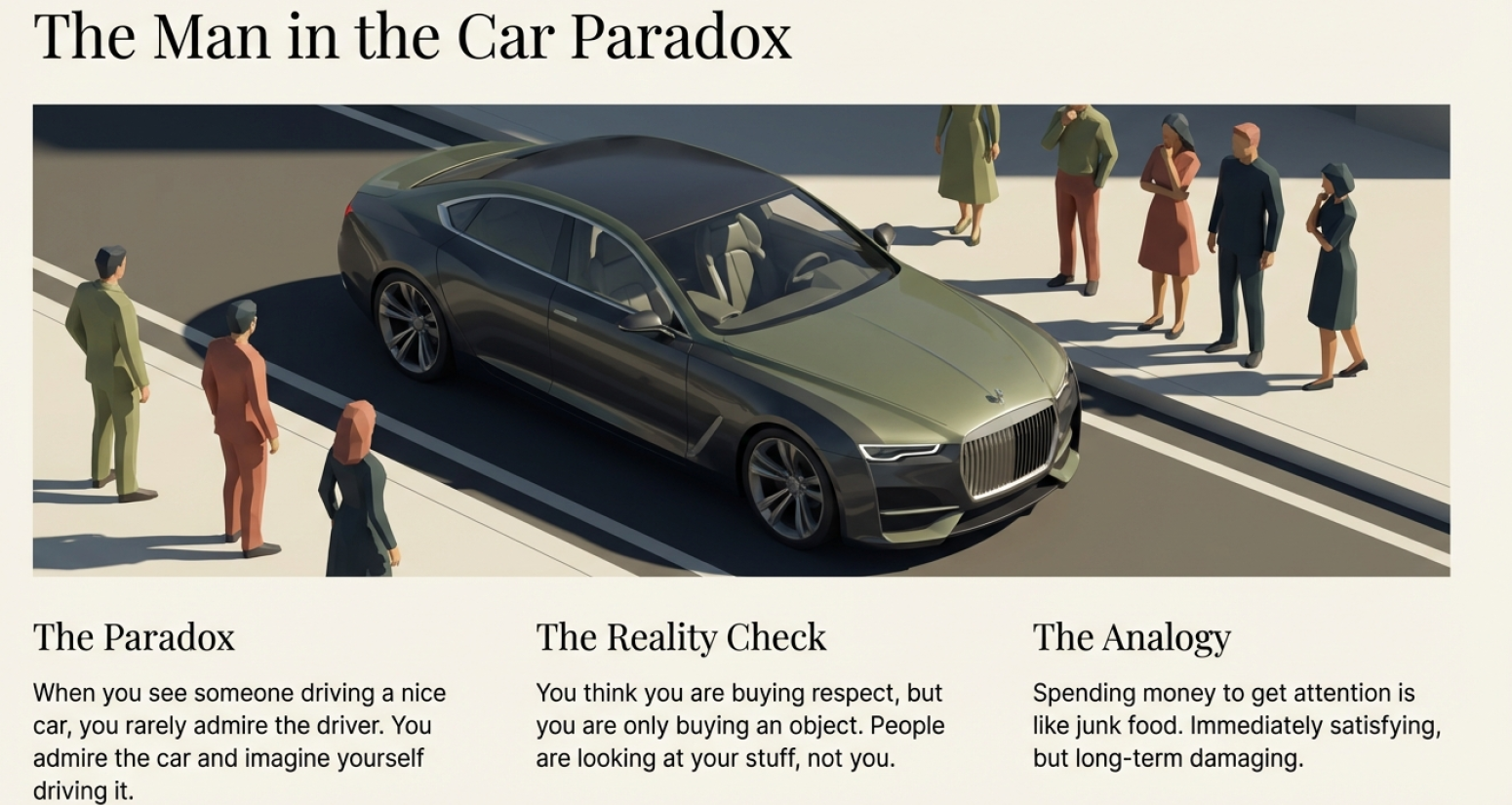
This is the "Man in the Car Paradox." When I see a guy in a Ferrari, I don’t think, "Wow, he’s cool." I think, "People would think I’m cool if I had that car". It’s a brutal truth: You think you are buying respect, but you are only buying an object. People are looking at your stuff, not you.
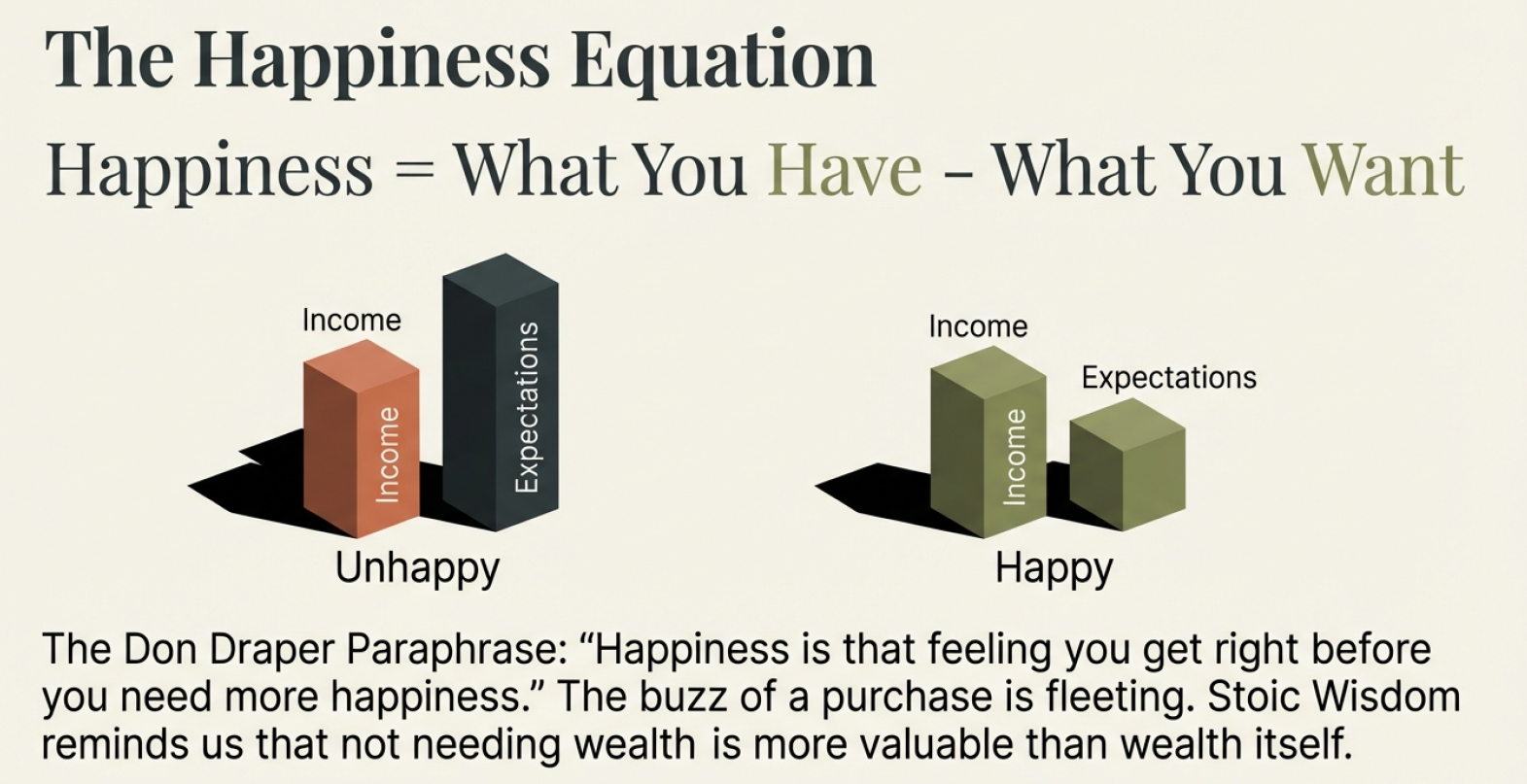
This led to a new equation for happiness. I always thought Happiness = More Income. The book argues that Happiness = What You Have – What You Want. If our expectations grow as fast as our income (which they usually do), we will never actually feel better.
3. Who Are You Trying to Impress?
This concept forced me to ask: Am I playing on an "Outer Scorecard" (seeking applause from strangers) or an "Inner Scorecard" (doing what satisfies me)? The book explains that jealousy is just "outsourcing your critical thinking to strangers". The goal isn't to win the status game; it's to stop playing it.
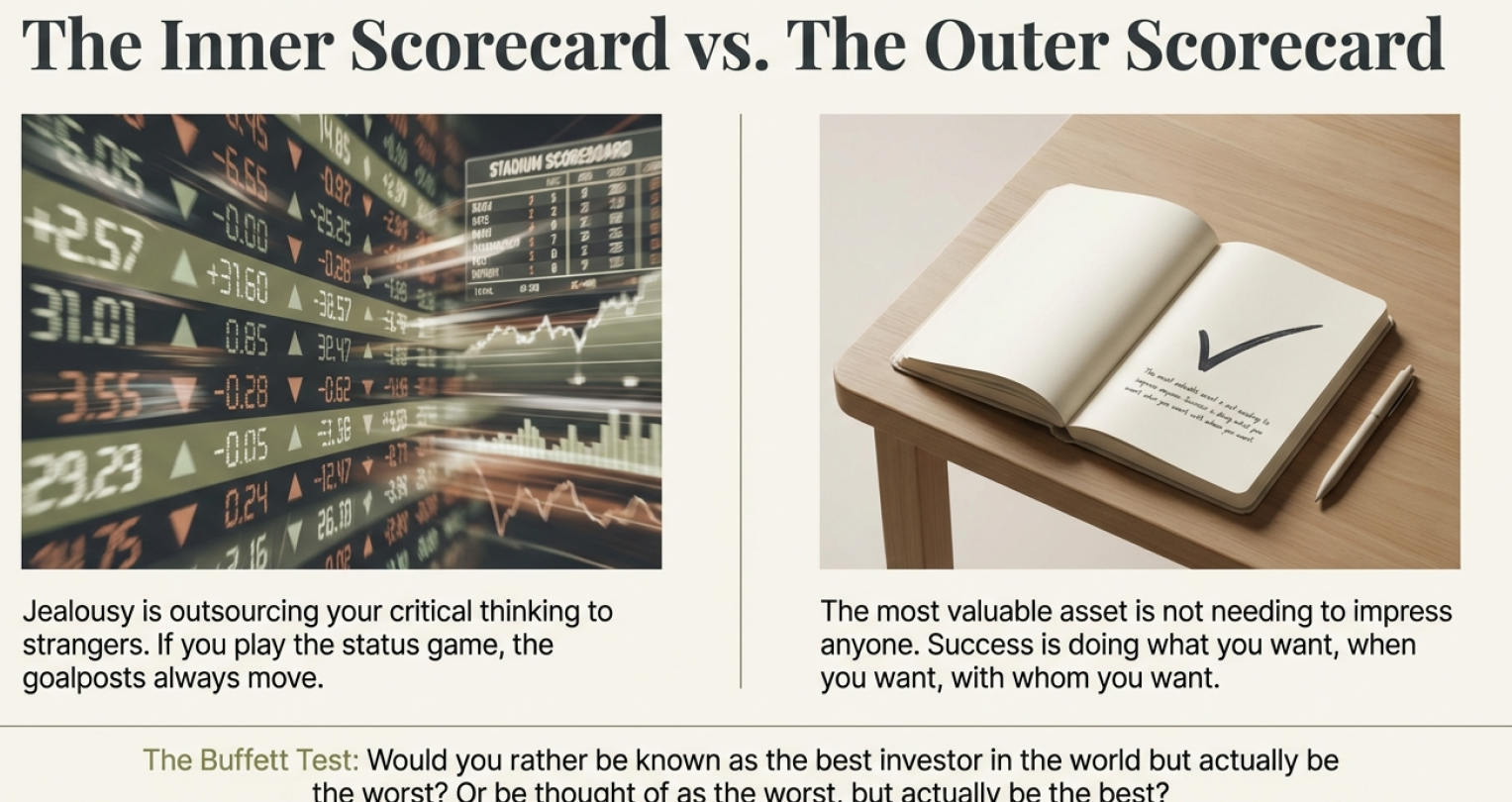
Have already started applying this framework to every purchase.
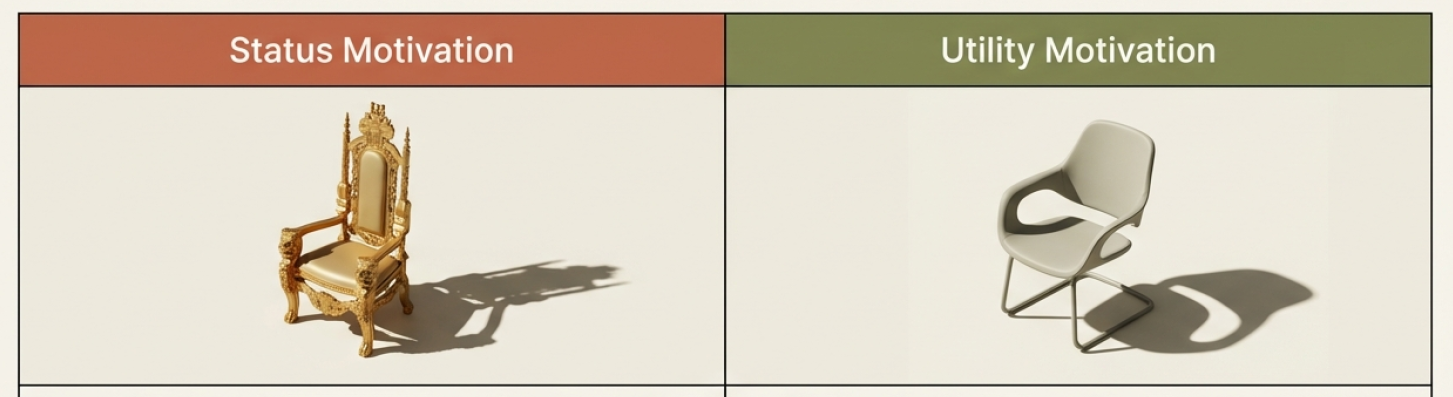
• Status Motivation: Buying a house that’s too big just to show I made it. This makes me conform to others identities.
• Utility Motivation: Buying a tool that buys me time or comfort. This allows me to express my identity.
Status devours utility. Also, understanding that utility is "deeply selfish in a beautiful way"
4. Redefining Wealth
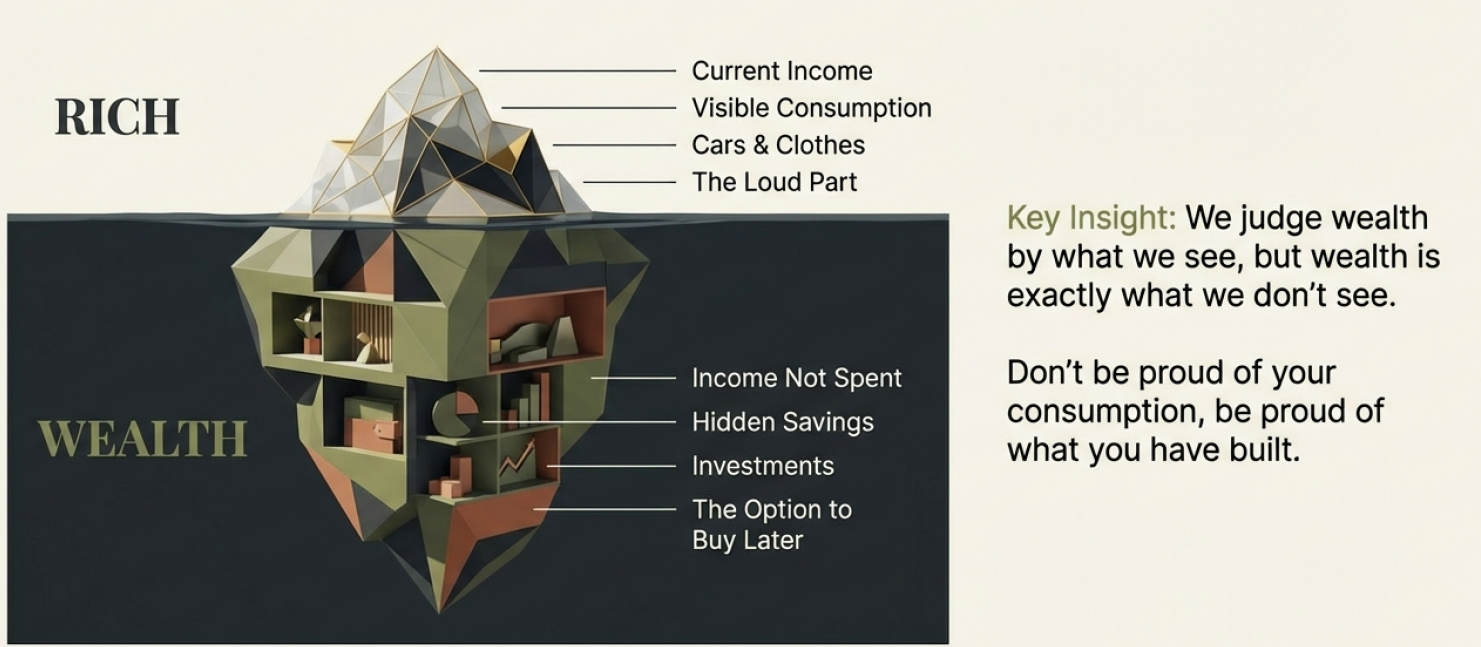
I used to view savings as "money I didn't get to spend." The book reframes it: "Wealth is exactly what you don't see". It’s the cars not purchased and the diamonds not bought. Rich is current income; Wealth is the option to buy later. This was definitely the shift that changed how I view saving.
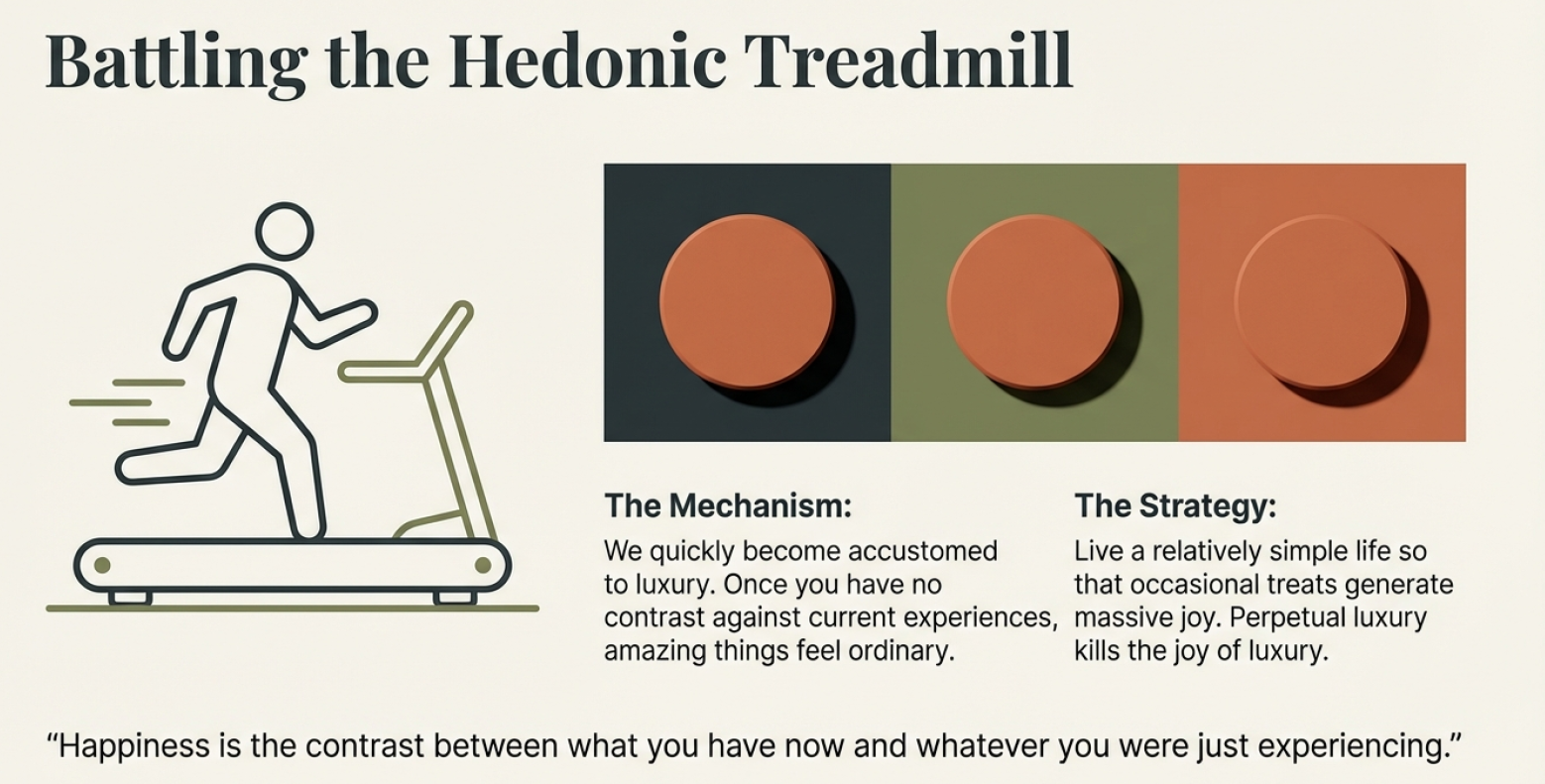
But why is it so hard to just be content? Because of the Hedonic Treadmill. We get used to luxury instantly. The strategy here is fascinating: Live a relatively simple life so that occasional treats generate massive joy. Perpetual luxury actually kills the joy of luxury.
5. The True Cost of Money
Balancing saving and spending is hard. The book suggests the "Regret Minimization Framework." We have to balance Compound Interest (patience) with the reality that we are "one day closer to death". Sometimes, spending money now to make a memory is the best investment, because memories compound just like interest does.
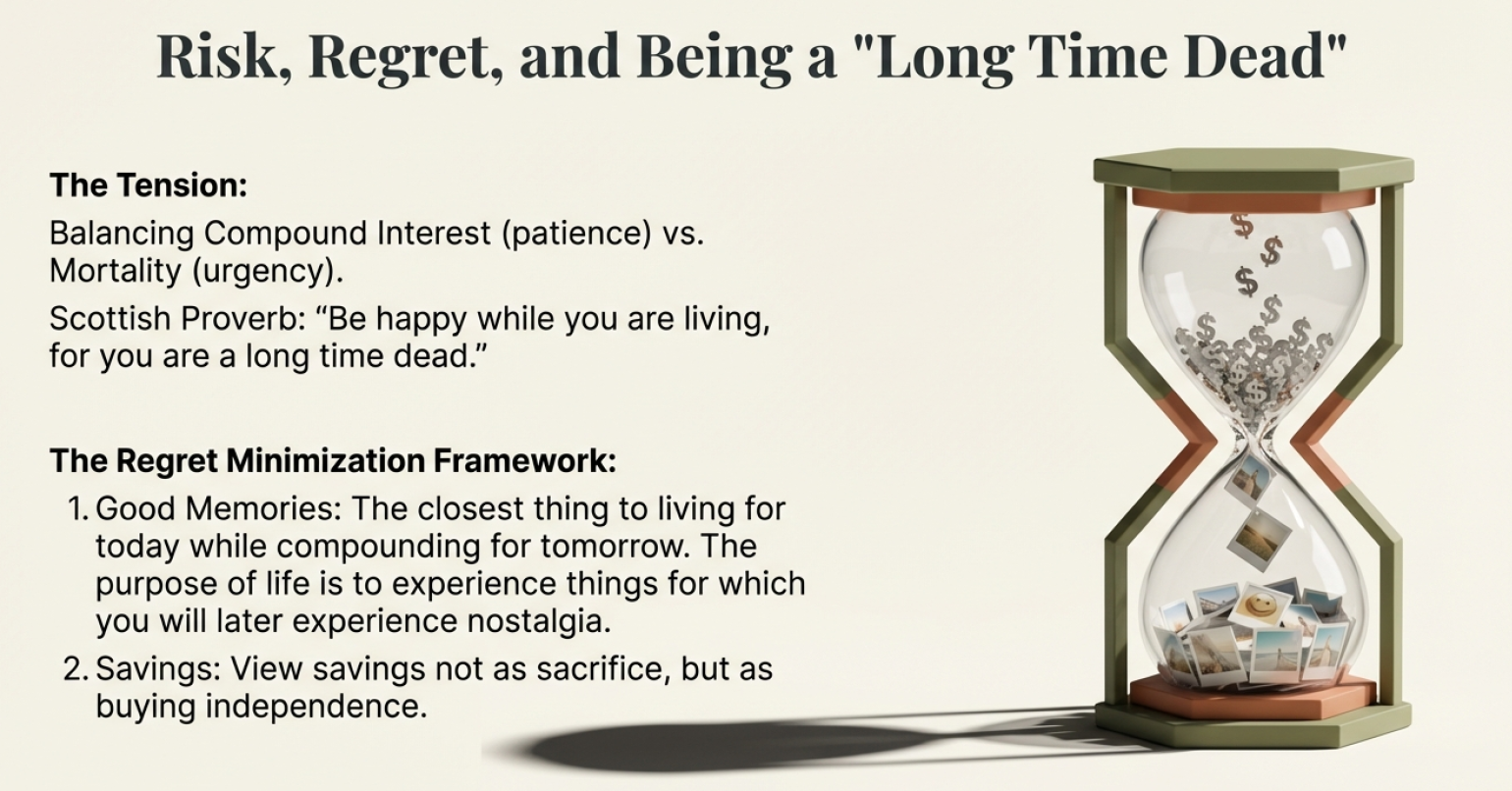
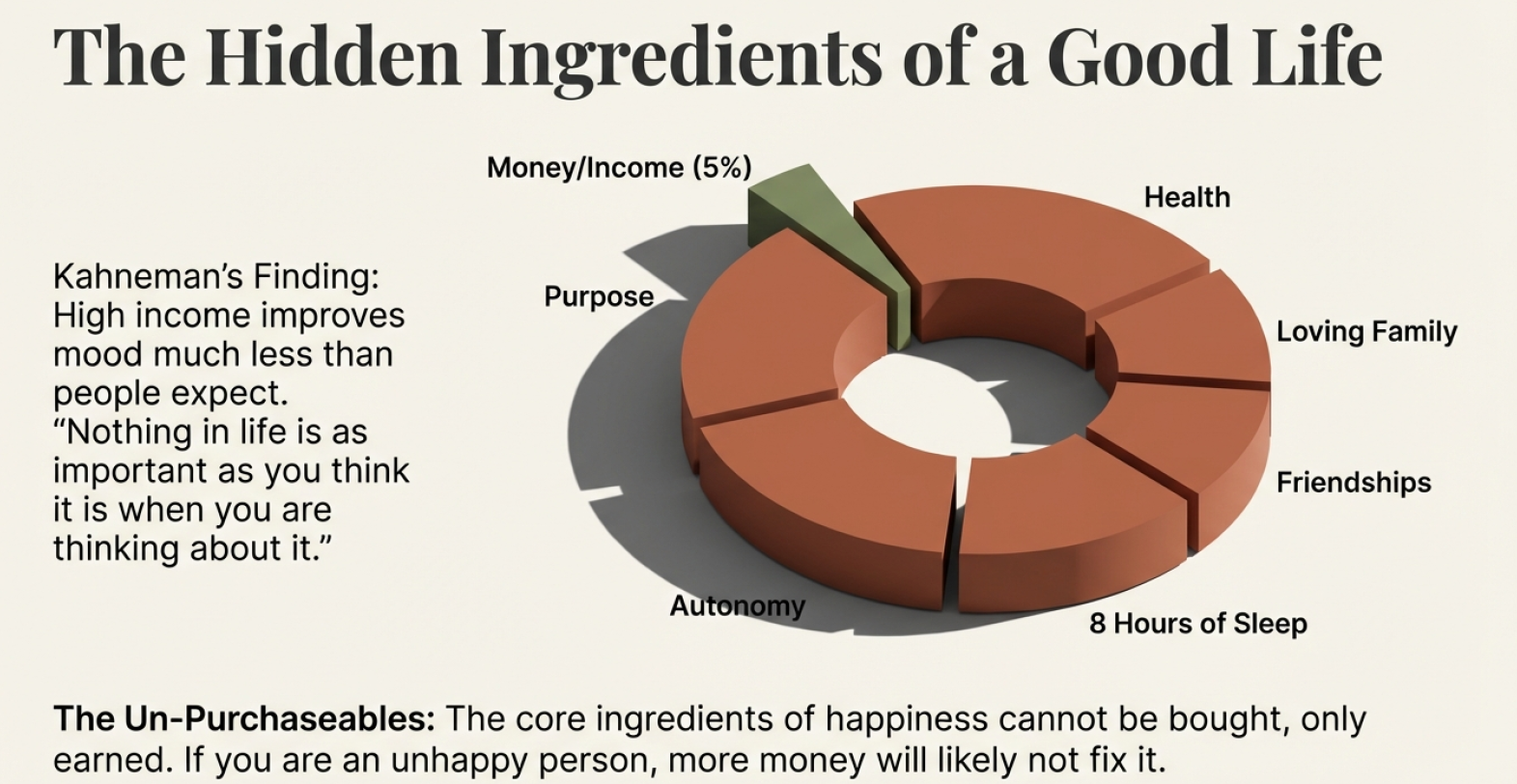
Ultimately, money is only about 5% of the pie. Health, family, and autonomy make up the rest. As the book notes, "Nothing in life is as important as you think it is when you are thinking about it".
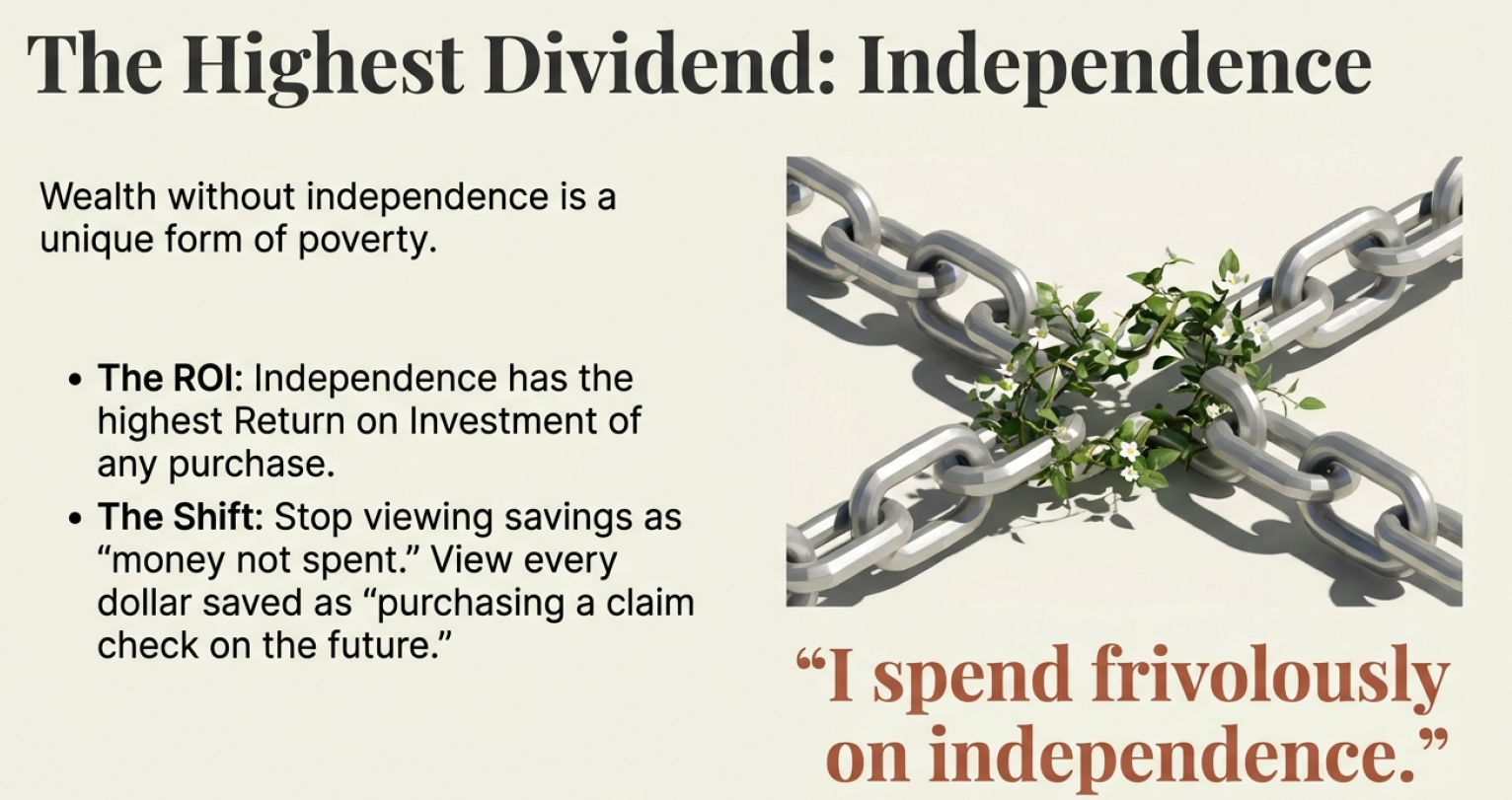
6. The Ultimate Goal: Independence
Loved this line: "I spend frivolously on independence". Every dollar saved isn't a sacrifice; it's purchasing a "claim check on the future".
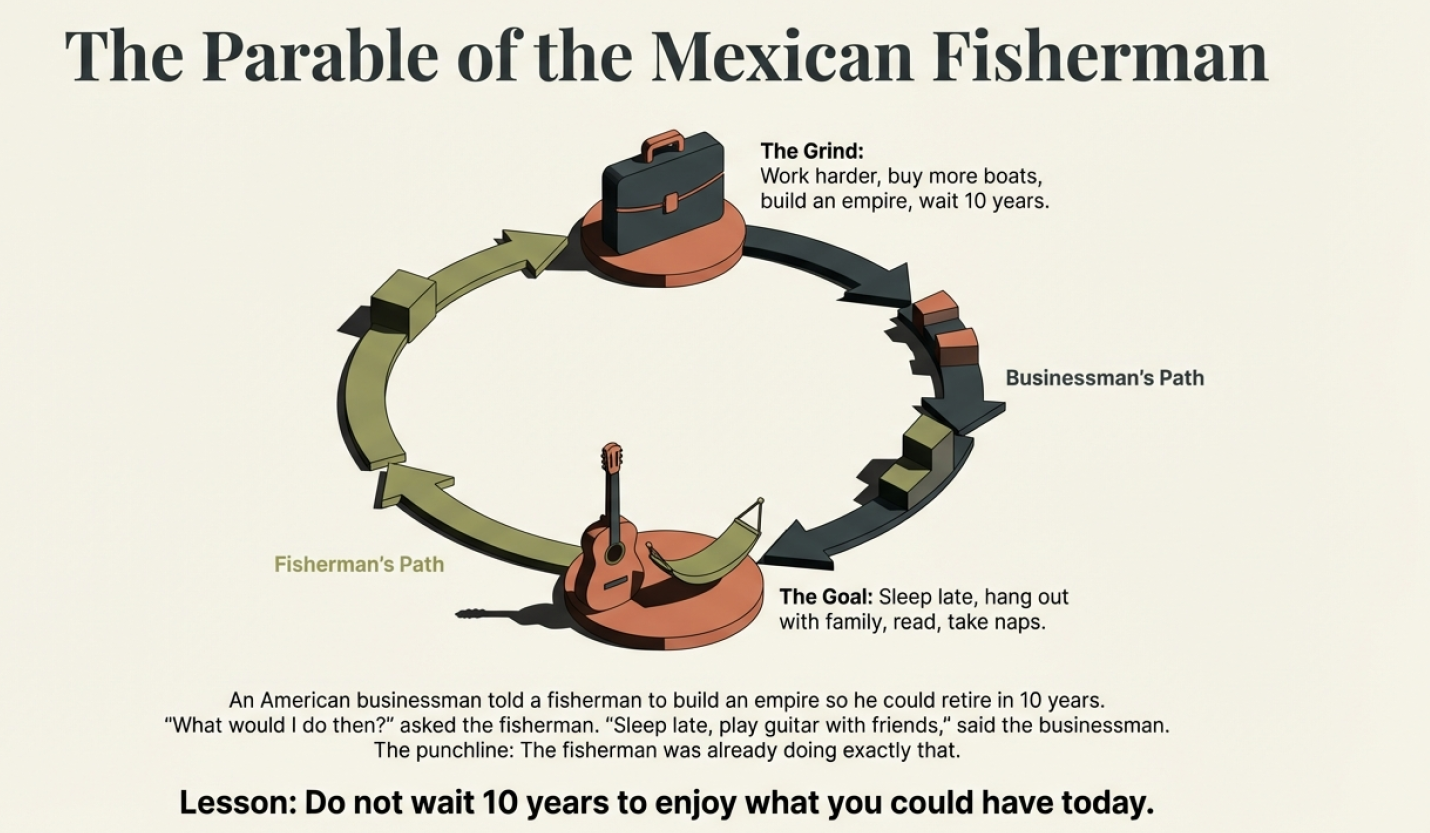
7. The Lesson
The book retells the classic story of the businessman and the fisherman. The businessman grinds for decades so he can eventually relax and fish. The fisherman is already relaxing and fishing. The lesson challenged my professional ambition: Do not wait 10 years to enjoy what you could have today.
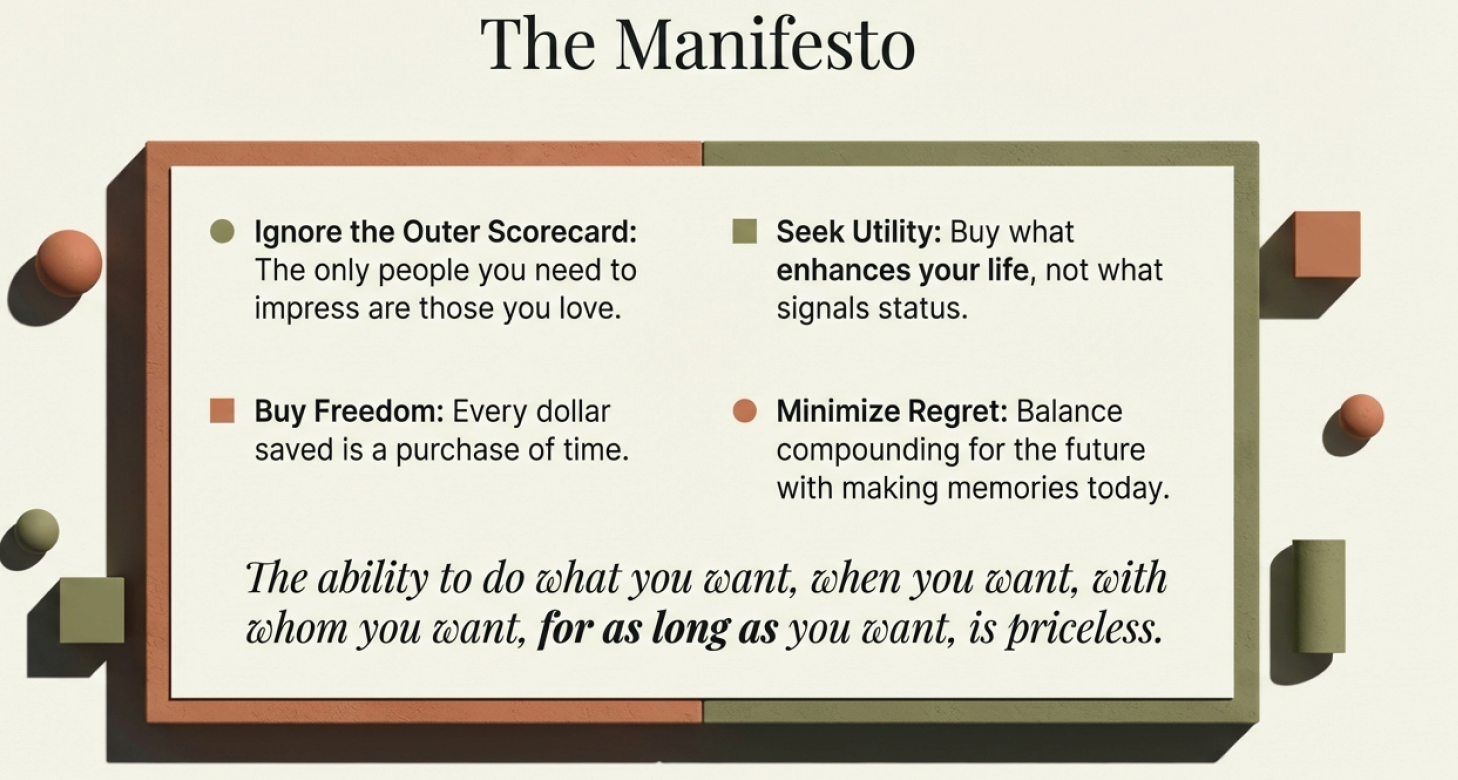
Closing the book, understood:
- Ignore the Outer Scorecard.
- Buy Freedom, not stuff.
- Seek Utility, not Status.
- Minimize Regret.
Final Thought
What worked best for me was the book's humanity. It acknowledges that spreadsheets don’t care about feelings, but money is emotional. It gave a clear understanding to stop judging how others spend their money (because I don't know their journey) and gave me the courage to be unapologetic about how I spend mine.
If you are looking to understand the "why" behind your wallet, this is essential reading.